Ragi mudde does not need a reinvention story. In central Karnataka, the finger-millet preparation is already a staple, formed from flour and water and eaten with an accompanying dish. Its culinary purpose was established long before an international shopper encountered the word “millet” on a premium packet.
The Karnataka tourism authority’s description identifies ragi mudde with the region’s ordinary meals. That is a useful place to begin: with a named grain, a preparation and a food culture, rather than an anonymous ancient ingredient waiting for a modern market to give it meaning.
The global attention is welcome when it expands opportunity. The danger is a familiar kind of erasure, in which an existing staple becomes interesting only after somebody else sells it as the next discovery. A better story begins with the plural. There are many millets, many growing environments and many reasons people cook them.
First, keep the names
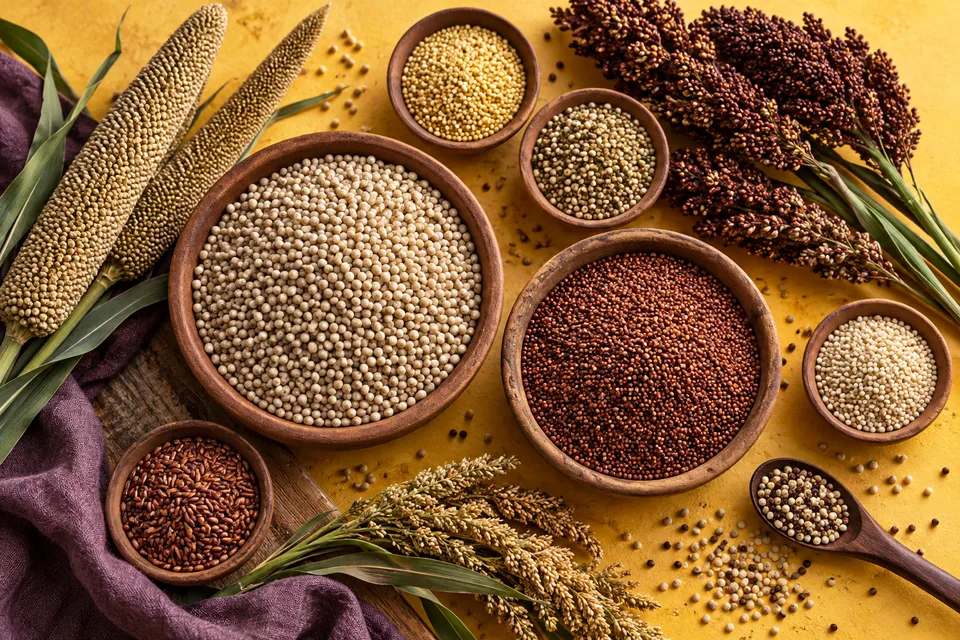
FAO’s International Year of Millets explanation uses “millets” for a diverse group of small-grained dryland cereals. Its campaign includes pearl, finger, foxtail, proso and other millets, alongside grains such as fonio, teff and sorghum. This is a broad grouping for a food-and-agriculture initiative, not a claim that the crops are botanically identical or interchangeable in a recipe.
The distinction is practical. A cook needs to know which grain is in the bag and what processing it has received. Whole grain, flour and other prepared forms offer different uses. A farmer needs a crop and variety suited to the place. A processor needs equipment matched to the material arriving from that farm. None of those decisions is answered by a generic promise that “millet” is good.
FAO’s technical account of millet types also distinguishes their growing environments. Finger millet’s association with cooler elevated areas differs from the conditions described for pearl millet. The document is a historical technical reference, not a current production table; its useful lesson is diversity within the group, rather than any old yield figure presented as today’s performance.
That diversity should survive promotion. If every package tells the same story of exceptional drought resistance, an important reason to preserve different crops can disappear behind a single exaggerated trait. Resilience belongs to a crop in an environment, with management and a particular kind of stress. It is not immunity to every failed rainy season.
The names also carry knowledge. Ragi tells a different culinary story from fonio. Retaining those names helps a reader find preparations, producers and histories that the umbrella term alone would conceal. A market can introduce a food to new customers without replacing the vocabulary of people who already use it.
Two kitchens, neither a museum
In Karnataka’s ragi mudde, texture and accompaniment are central to what the flour is doing. The preparation is not an inferior version of a wheat loaf. Judging it only by whether it can imitate bread would misunderstand its function before the tasting begins.
Farther west, fonio participates in another set of food traditions. FAO’s 2024 reporting from Chereponi in northeastern Ghana describes its cultivation, often by women, and uses including porridge and a couscous-like preparation. The account connects work with farmers and chef Fatmata Binta to production and consumption. Its account of women threshing, winnowing and drying by hand explains why processing machines and operator training belong beside the chef’s promotion work. Making fonio more visible on a menu does not remove the labor between a harvested seed and a usable ingredient.
The two examples resist the idea that a crop’s future depends only on inventing a new product. A familiar preparation can already contain sophisticated knowledge about milling, hydration, heat and the meal around it. Supporting the crop may mean making that existing food easier to obtain or prepare, rather than replacing it with a snack designed for an export shelf.
At the same time, respecting a cuisine does not require freezing it. People adapt ingredients, equipment and routines. A flour can enter a new preparation without dishonoring its established uses. The important distinction is between culinary exchange that acknowledges its sources and a novelty story that treats those sources as an inconvenient prehistory.
FAO’s Millets Recipe Book, developed from its 2023 chefs’ challenge, deliberately places traditional and inventive preparations together. The collection includes named contributors and dishes from different regions. The collection gives a newcomer several starting points, each attached to a dish and contributor rather than a generic instruction to cook every millet alike.
A reader new to these grains can take that range as permission to be specific. Ask what a particular dish needs from its grain: separate texture, a cohesive mass, a fermented batter or a flour with a defined role. Then investigate a suitable ingredient and preparation. “Replace rice with millet” is sometimes an idea worth trying, but it is not a complete culinary description of a diverse family of foods.
Between harvest and packet
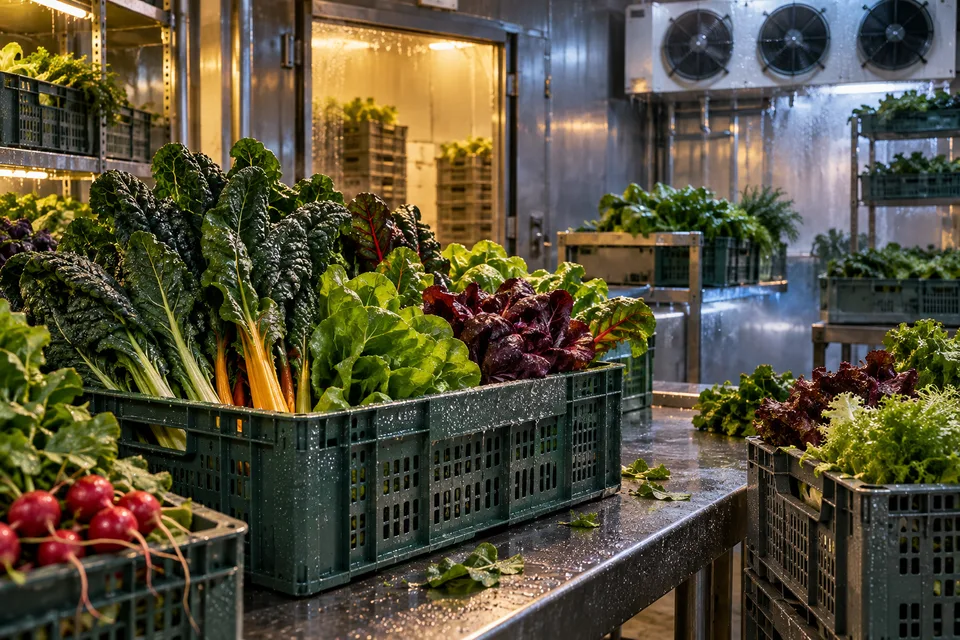
An ingredient’s revival can fail between the farm and the kitchen. Grain needs cleaning, appropriate processing, storage and a buyer. A farmer can produce a crop that consumers say they value while the local chain still lacks an affordable way to make it convenient to use.
ICRISAT’s March 2026 account of a processing center in Gaya, Bihar describes machinery with stated capacity of about 1,000 kilograms a day and an expected reach of 3,000–5,000 farmers and producer-organization members. The account concerns a development initiative and its intended benefits. Installed capacity and projected reach should not be reported as verified daily throughput or measured long-term income gains.
The example nevertheless identifies an important kind of investment. A value chain needs more than the seed and the marketing campaign. Processing can affect the work required, consistency of the product and the price at which it reaches the next buyer. A machine is useful when the service around it is dependable: operators, repairs, power, scheduling and enough demand to keep it functioning.
The location of that service can change who benefits. A facility near growers may reduce one barrier while introducing another if its charges, minimum volumes or opening arrangements are difficult for small producers. An appropriate assessment asks who can actually use it and whether the terms fit their work, not simply whether the district now contains equipment.
Women’s participation needs the same specificity. ICRISAT’s gender-equality program account identifies access to resources, finance and market opportunities across the value chain as part of its work. Those aims matter because participation in production does not automatically mean control over the income or the machinery. A headline about women growing a crop should lead to questions about ownership, decisions and payment.
New demand can therefore be evaluated through the chain rather than only at its fashionable end. Does it create a dependable order? Can producers meet the specification without losing flexibility they need? Are processing costs and rejected material accounted for? Is the extra value captured near production or mainly after a long journey into a branded package?
These are commercial questions with cultural consequences. A food remains part of ordinary life partly because it is available in forms and prices that households can use. A premium market can provide opportunity, but an ingredient’s success should not be measured solely by how far it has moved from that everyday role.
A packet marked “quick cooking” also contains a story about labor. Someone has performed work that another cook no longer has to do. The useful question is where that work moved and how it is paid for. Convenience can make an ingredient fit a household’s routine; it can also conceal processing that changes its cost, properties and relationship with its previous uses.
That is not an argument against convenient products. It is a reason to make their offer clear. A customer choosing a prepared grain should know whether the product is whole, milled, blended or otherwise processed, and should receive instructions appropriate to that form. An unfamiliar ingredient is easily blamed for a disappointing meal when the real problem is that the label treated several different products as interchangeable.
For a producer, consistency and good information can be more valuable than another broad campaign about ancient grains. They help the second purchase happen, after curiosity has already delivered the first.
The climate claim needs a location
Millets attract attention partly because several crops in the group are useful in difficult dryland conditions. That is a substantial agricultural reason to invest in them. It is not a basis for promising that every millet variety will outperform every alternative in every field.
The relevant comparison includes the growing season, water availability, soil, management, yield and intended use. A crop that fits one rainfed system may have a different result elsewhere. The value may include reducing exposure to a particular risk or diversifying production, rather than maximizing a single yield measure under ideal conditions.
Genetic diversity belongs in that account. FAO’s discussion of climate-smart millet seeds highlights the diversity available across sorghum and millets and the importance of conserving it. The opportunity is not only a single improved variety, but a resource for adapting crops to different needs over time.
Conservation also depends on continued use. Seed collections and research can preserve important material, while farmers’ decisions and local food markets help determine what remains cultivated. A promotion campaign that narrows demand to one easily standardized grain could miss part of the diversity it celebrates.
This is why the commercial and agronomic stories should be read together. A farmer needs a viable reason to grow a crop, not only praise for its resilience. A buyer needs a supply that can be maintained, not only a compelling origin story. A food policy needs to consider both without pretending that demand automatically produces fair conditions at the farm.
Let the meal do some of the talking
Nutrition marketing can flatten the same diversity in another way. A nutrient figure for one grain and preparation cannot describe every product carrying the word millet. Refining, ingredients, serving size and the rest of the meal change what a consumer eats. There is no need to turn a useful food into a treatment claim to justify its place at the table.
A better product description can be more ordinary and more informative: the grain, its form, where it came from, how it behaves and a preparation suited to it. Flavor, texture and the food it accompanies give people reasons to return after the first purchase. A list of superlatives may win attention without helping anyone make dinner.
The most persuasive future for millets is therefore not a global menu in which every familiar grain is replaced. It is a larger repertoire, with crops and cuisines valued for their particular strengths. New uses can join established ones, and new customers can learn the names rather than erase them.
Ragi mudde returns us to the point. The dish already has a place in a meal and a culture that knows what to do with it. The opportunity is to make that kind of knowledge more visible and the supply behind it more dependable. The old grain has not been waiting to be discovered. It has been waiting for wider attention to arrive with a little more curiosity.
Sources & context
This article draws on the sources linked in the text. Analysis and illustrative scenarios are identified separately from reported findings.
- Karnataka tourism authority's description
- International Year of Millets explanation
- technical account of millet types
- 2024 reporting from Chereponi in northeastern Ghana
- Millets Recipe Book
- March 2026 account of a processing center in Gaya, Bihar
- gender-equality program account
- discussion of climate-smart millet seeds